
Data has already become one of the most valuable assets available to businesses. Most are already collecting large volumes of data through day-to-day business activities, from advertising platforms to sales software. The challenge for businesses is never obtaining data; it is trying to uncover the underlying meaning of the data.
Traditional reporting plays a key role in showing stakeholders what has happened. Dashboards and regular performance reports allow access to monitor campaigns and track progress live. However, both still leave important questions unanswered. Why are customers behaving differently? What trends are emerging before they become obvious? How will the next quarter look?
By combining marketing expertise with advanced analytical techniques, agencies can move beyond traditional reporting. By using data to answer more complex business questions, this enables you to gain deeper insights and make more informed decisions. Coding makes it possible to automate complex processes, analyse larger datasets, identify hidden patterns and build predictive models that would be impractical using spreadsheets alone.
This article explores how advanced analysis enables businesses to gain deeper insight, make more informed decisions and uncover opportunities that traditional reporting can often miss.
1. From Reporting to Analysis
Businesses rely on regular reports to understand their marketing performance. These only answer questions such as:
-
- How much was spent?
- How many leads/sales were generated?
- Which channels performed the best?
- How did results compare with previous periods?
Whilst these metrics are essential for measuring success, they are only the starting point. Analysis can go a step further by investigating why performance changed and the factors influencing these results. Instead of only describing historical performance, analysis can explore relationships between different datasets to reveal meaningful business insights.
For example, combining ad performance data with sales data could reveal that one marketing channel generates fewer leads, but it could also generate significantly higher-value customers. Equally, analysing geographic, demographic and behavioural data can be used to identify audience segments that outperform others.
Coding allows analysts to combine data from multiple systems, clean inconsistencies and explore larger datasets than traditional spreadsheet tools. This enables businesses to move from descriptive reporting towards evidence-based decision-making. Businesses that effectively use data and analytics are more likely to make better decisions.
2. Where Coding Adds Value
Businesses often store data across numerous platforms. Each platform captures valuable information, but analysing them individually only provides a small part of the bigger picture. Coding makes it possible to bring these sources together into a consistent analytical model.
Rather than manually copying information between spreadsheets, analysts can automatically extract, standardise and combine data from multiple systems. This creates a single, reliable dataset that supports more comprehensive analysis.
Once data has been consolidated, coding also enables analysis that would be difficult or time-consuming to perform manually. Because these processes are repeatable, they can be easily updated as new data becomes available, allowing for businesses to make the most informed decisions possible.

3. Automating the Data Preparation Process
One of the most time-consuming aspects of analysis is preparing the data before analysis can even begin. Raw datasets contain lots of errors, like duplicated records, inconsistent formats, missing values or conflicting naming conventions. When these issues are corrected manually, the process is slow, repetitive and prone to human error.
But coding allows these preparation tasks to be automated:
-
- Standardising formats
- Remove duplicate records
- Validate data quality
- Merge multiple datasets
- Apply consistent business rules
- Generate clean analytical datasets
Once these scripts have been implemented, they can run repeatedly with minimal manual input. This not only saves time but also improves consistency and confidence in the resulting analysis (2). Leading analysts to spend less time preparing data and more time interpreting results and advising clients.
4. Understanding Customers More Deeply
Not every customer behaves in the same way. Some purchase regularly, others buy only once, while some respond to particular campaigns more than others. Understanding these differences enables businesses to make more informed marketing decisions.
Customer data can be analysed at a much deeper level than standard reporting typically provides. By combining transactional, marketing and behavioural information, analysts can identify meaningful customer segments and measure how different groups contribute to overall business performance.
For example, two customers may have spent the same amount overall, but one may have made several smaller purchases while the other made a single large purchase. Treating them as the same customer group could overlook important differences in their behaviour.
These insights help businesses focus investment where it is most effective, personalise marketing activity and improve long-term customer relationships. Rather than treating every customer identically, businesses can tailor marketing strategies to different customer groups.
5. Looking Ahead with Forecasting
Historical data can tell a business a great deal about its performance, but it can also provide a starting point for considering what may happen in the future. Forecasting uses historical patterns and trends to estimate potential future outcomes.
Coding can support this by allowing data to be prepared and analysed across different time periods, identifying trends and applying forecasting techniques to estimate future performance. For example, businesses may use forecasting to explore potential future revenue, sales volumes or demand.
Forecasting helps businesses anticipate demand, allocate budgets more effectively and prepare for changes before they occur. It does not predict the future with certainty, but it provides evidence-based estimates that support planning and resource allocation.
Used appropriately, forecasting can therefore add another dimension to analysis, helping businesses move from understanding past performance towards preparing for possible future outcomes.

6. Taking Analysis Further with Machine Learning
Forecasting estimates future outcomes using historical trends. Machine learning extends this capability by identifying complex patterns within data that traditional analytical techniques may not detect. Rather than relying solely on predefined rules, machine learning models learn relationships from historical data and use those relationships to generate predictions or classifications when new information becomes available.
For businesses, this can create opportunities to investigate more abstract questions such as which factors are associated with a particular outcome. These techniques are particularly valuable when organisations collect significant volumes of customer or operational data, where manual analysis would struggle to identify subtle relationships.
Machine learning is not a replacement for traditional analytics. Its effectiveness depends on the data, model selection and interpretation by experienced analysts. When applied in the right situations, it enables businesses to make even better-informed decisions using increasingly complex datasets.
7. From Complex Analysis to Clear Business Insights
The value of advanced analytical techniques is not measured by how sophisticated they are, but by the insights they provide. No matter how detailed the analysis, its purpose should always be to support better business decisions.
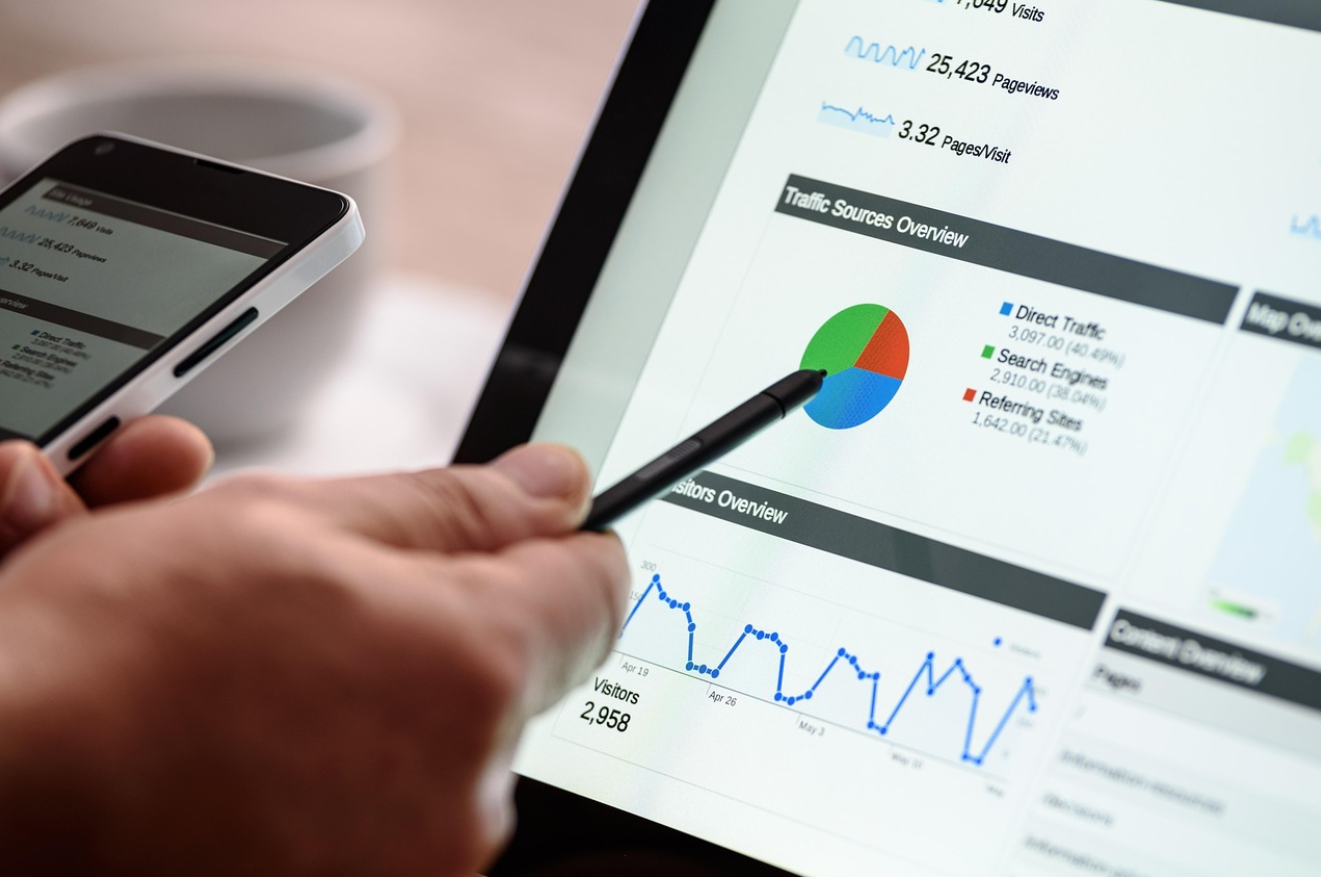
Interactive dashboards, visualisations and concise reporting help communicate findings in an accessible way, allowing stakeholders to explore performance while focusing on the metrics most relevant to their objectives.
Behind every dashboard may be extensive data processing, automated workflows and sophisticated analytical models, but clients should not need to understand the technical implementation to benefit from the results.
Ultimately, the goal is not to make analysis more complex. It is to make it more meaningful.
8. Knowing When Not to Use Advanced Techniques
Not every business requires advanced modelling or machine learning. As analytical techniques continue to evolve, it can be tempting to assume that more advanced methods will always produce better results. In reality, the most effective approach depends on the question being asked, the data available and the outcome a business is trying to achieve.
There are many situations where traditional reporting or straightforward analysis provides the answers required. In others, coding can unlock opportunities to automate processes, investigate data in greater depth or apply more advanced techniques such as forecasting and machine learning.
The key is understanding which approach is most appropriate. By selecting the right tools for the task, businesses can ensure their analysis remains accurate, relevant and focused on delivering meaningful insights rather than unnecessary complexity.
Ultimately, coding should be viewed as another tool within the analytical toolkit. One that can complement existing methods and help answer questions that might otherwise remain unexplored.
Conclusion
Traditional reporting remains an essential part of understanding business performance, providing a clear picture of what has happened. However, coding creates opportunities to explore data in greater depth, automate repetitive processes and investigate questions that go beyond headline figures.
Whether through customer segmentation, forecasting, machine learning or more efficient data preparation, the aim is not simply to apply more advanced techniques but to generate clearer insights that support better business decisions.
As businesses continue to generate increasing volumes of data, the ability to transform that information into meaningful insight will become ever more valuable. By combining established analytical methods with code, organisations can gain a deeper understanding of their data and uncover opportunities that may otherwise remain hidden.
If your organisation is looking to move beyond traditional reporting and discover how deeper analysis could support your business objectives, our team would be happy to discuss how these techniques could help unlock greater value from your data.